
Salmonella Prevention & Chickens
How to prevent and lessen the chances of contracting salmonella when raising chickens. According to the Centers for Disease Control the best way to prevent contracting salmonella from your backyard flock is to be sure to properly wash your hands with soap and water (use hand sanitizer if soap and water is unavailable) after handling chickens, their feces or touching anything that they use or where they live and be sure to supervise children during hand washing (CDC,2016). Watch our featured video below: Salmonella-an overview and introduction.


How to Prevent Salmonella Contamination While Raising Backyard Chickens
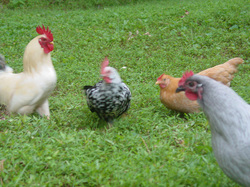
In addition to proper hand washing procedure's there are more ways to prevent contracting salmonella from your chickens.
House pet chickens salmonella protection
If you have a house pet chicken, you should make sure it wears a chicken diaper while in the house so there is less chance of contracting salmonella from feces. do not allow it in your pantry or kitchen where food is stored, cooked or kept or bathroom areas. Do not allow children under the age of 5 or adults 65 or older or anyone with weakened immune systems to handle live baby chicks, chickens or other poultry. Make sure the eggs you eat and serve are thoroughly cooked. If you touch or snuggle your chickens make sure they do not get near your mouth and do not touch your mouth after handling them. Clean cages, feeders, and waterers outside, not in your kitchen sink, bathroom sink, or bathtub. "Buy birds from hatcheries that participate in the U.S. Department of Agriculture National Poultry Improvement Plan (USDA-NPIP)", (CDC, 2016). Be sure to use gloves when cleaning chicken feces, coops, and any place you keep your chickens.
Salmonella poisoning can make you sick and in extreme cases can even cause death. Many chicken keepers are asking us how to prevent getting salmonella from food, eggs, and chickens. We have found many ways to prevent it. How to prevent salmonella using ultra violet lighting, how to identify salmonella in eggs, how to pasteurize eggs to prevent salmonella, how proper handling of baby chicks and eggs can prevent salmonella, recent salmonella statistics, and vaccinating your chickens to prevent salmonella and other diseases. (See More Below).
House pet chickens salmonella protection
If you have a house pet chicken, you should make sure it wears a chicken diaper while in the house so there is less chance of contracting salmonella from feces. do not allow it in your pantry or kitchen where food is stored, cooked or kept or bathroom areas. Do not allow children under the age of 5 or adults 65 or older or anyone with weakened immune systems to handle live baby chicks, chickens or other poultry. Make sure the eggs you eat and serve are thoroughly cooked. If you touch or snuggle your chickens make sure they do not get near your mouth and do not touch your mouth after handling them. Clean cages, feeders, and waterers outside, not in your kitchen sink, bathroom sink, or bathtub. "Buy birds from hatcheries that participate in the U.S. Department of Agriculture National Poultry Improvement Plan (USDA-NPIP)", (CDC, 2016). Be sure to use gloves when cleaning chicken feces, coops, and any place you keep your chickens.
Salmonella poisoning can make you sick and in extreme cases can even cause death. Many chicken keepers are asking us how to prevent getting salmonella from food, eggs, and chickens. We have found many ways to prevent it. How to prevent salmonella using ultra violet lighting, how to identify salmonella in eggs, how to pasteurize eggs to prevent salmonella, how proper handling of baby chicks and eggs can prevent salmonella, recent salmonella statistics, and vaccinating your chickens to prevent salmonella and other diseases. (See More Below).
Featured Video: Salmonella-A Quick Introduction and Overview
Related Topics (Click Links to View) |
Helpful Tips to Prevent Salmonella Preventing Salmonella in Your Flock: See Preventing Salmonella while raising chickens Proper Handling of Baby Chicks to Prevent Salmonella: Proper handling of baby chicks and eggs can prevent salmonella and the spread of salmonella in your flock. Find out how to properly handle your baby chicks and eggs to prevent contracting salmonella Proper handling of baby chicks and eggs can prevent salmonella |
Using UV Lighting to Sanitize & Reduce Bacteria in Your Coop: Studies show ultra violet lighting and using stainless steel utensils and sinks can eliminate the chances of contracting salmonella. Use ultra violet lights in your hen house or chicken coop to prevent salmonella in your chickens. Studies show that ultra violet (UV) lighting eliminates salmonella contamination. See Ultra violet lights & chickens |
Proper Hand Washing to Prevent Salmonella: Cleanliness and hand washing goes a long way in preventing salmonella and other diseases. Find out the proper hand washing method here: Go to How to wash your hands after handling chickens |
How to identify and prevent salmonella in eggs: Though you cannot tell by looking at an egg that it has salmonella, eggs can be tested for it and salmonella can be seen under a microscope. Go to How to Identify Salmonella Infected Eggs |
Got Sick Chickens? Signs, symptoms and treatments for various chicken illnesses: Go to Chicken Sickness: Signs, Symptoms, & Treatments |
Vaccines For Chickens There are specific times, types of vaccinations, and ways to vaccinate chickens. There is even a salmonella vaccination for chickens. Find out how and why here: See Vaccines For Chickens |
References:
1. Keeping backyard poultry. (July 22,2016). Centers for disease control (CDC). http://www.cdc.gov/features/salmonellapoultry/
1. Keeping backyard poultry. (July 22,2016). Centers for disease control (CDC). http://www.cdc.gov/features/salmonellapoultry/
